General: 450-378-4895
Sales: 1-877-378-1228

Fuel consumption is an important consideration for drivers in Quebec, whether in Granby, Cowansville, Sherbrooke or on Montreal’s South Shore. It directly affects a vehicle’s operating costs and overall automotive budget.
Unlike real-world driving, the published figures come from standardized tests conducted by Natural Resources Canada to allow fair comparisons between vehicles.
Laboratory testing provides controlled conditions that make it possible to compare models more consistently.
The tests are performed on a dynamometer, a test bench that simulates different driving conditions. Before testing, vehicles are driven for approximately 6,000 km to stabilize their performance.
| Cycle | Description |
|---|---|
| City | Frequent stops and urban traffic |
| Highway | Steady highway driving |
| Cold weather | Low-temperature start-up under Canadian winter conditions |
| Air conditioning | Use of the air-conditioning system in hot weather |
| Aggressive driving | Rapid acceleration and more dynamic driving |
| Element | City | Highway |
|---|---|---|
| Distance | 17.8 km | 16.5 km |
| Duration | 31 minutes | 12 minutes |
| Stops | 23 | None |
| Average speed | 34 km/h | 78 km/h |
| Temperature | 20 to 30°C | 20 to 30°C |
Quebec experiences major seasonal temperature changes that can directly affect fuel consumption.
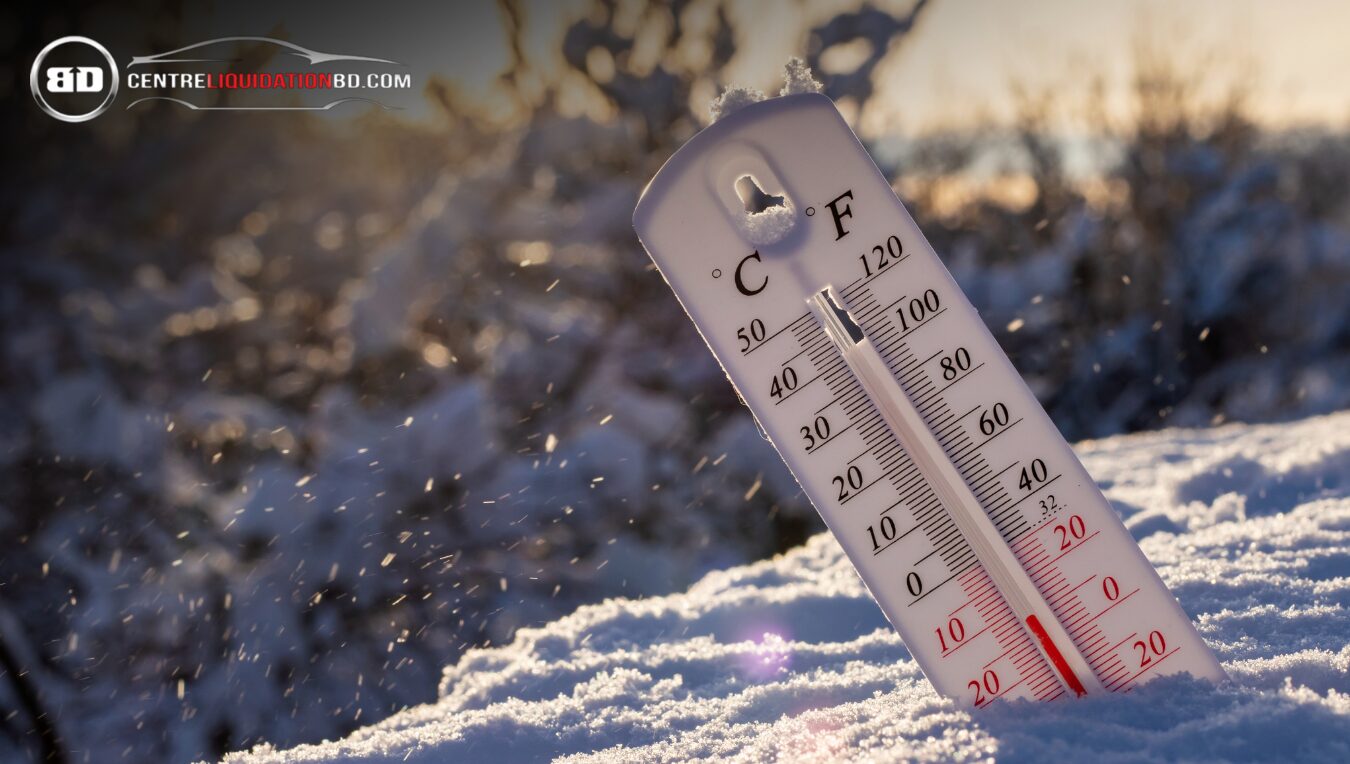
Winter conditions naturally increase fuel consumption.
Using air conditioning increases engine load and therefore overall fuel consumption.
Whether you live in Granby, Cowansville, Sherbrooke or on Montreal’s South Shore, understanding these figures can help you choose a vehicle that better matches your needs and driving habits.
View official fuel-consumption ratings
Located in Granby, Centre de Liquidation BD serves drivers from areas including Montreal’s South Shore, Cowansville, Bromont and communities between Sherbrooke and Brossard who are looking for used vehicles suited to their needs.
Natural Resources Canada’s fuel-consumption tests provide an official basis for comparing vehicles under standardized conditions in Canada.
Yes. They are useful for comparing vehicles with one another, but they do not represent exact real-world fuel consumption.
Actual fuel consumption depends on driving style, climate, traffic and vehicle maintenance.
Yes. Winter temperatures increase fuel consumption because the engine has to work harder.
Yes. Air conditioning increases the load on the engine.
They are tested in laboratories that simulate different driving conditions.